# High Polygons

{% hint style="info" %}
This guide is based on ZBrush.\
\
You can create high-polygons using various tools like 3ds Max, Blender, CLO, and Marvelous Designer.
{% endhint %}

## 3ds Max

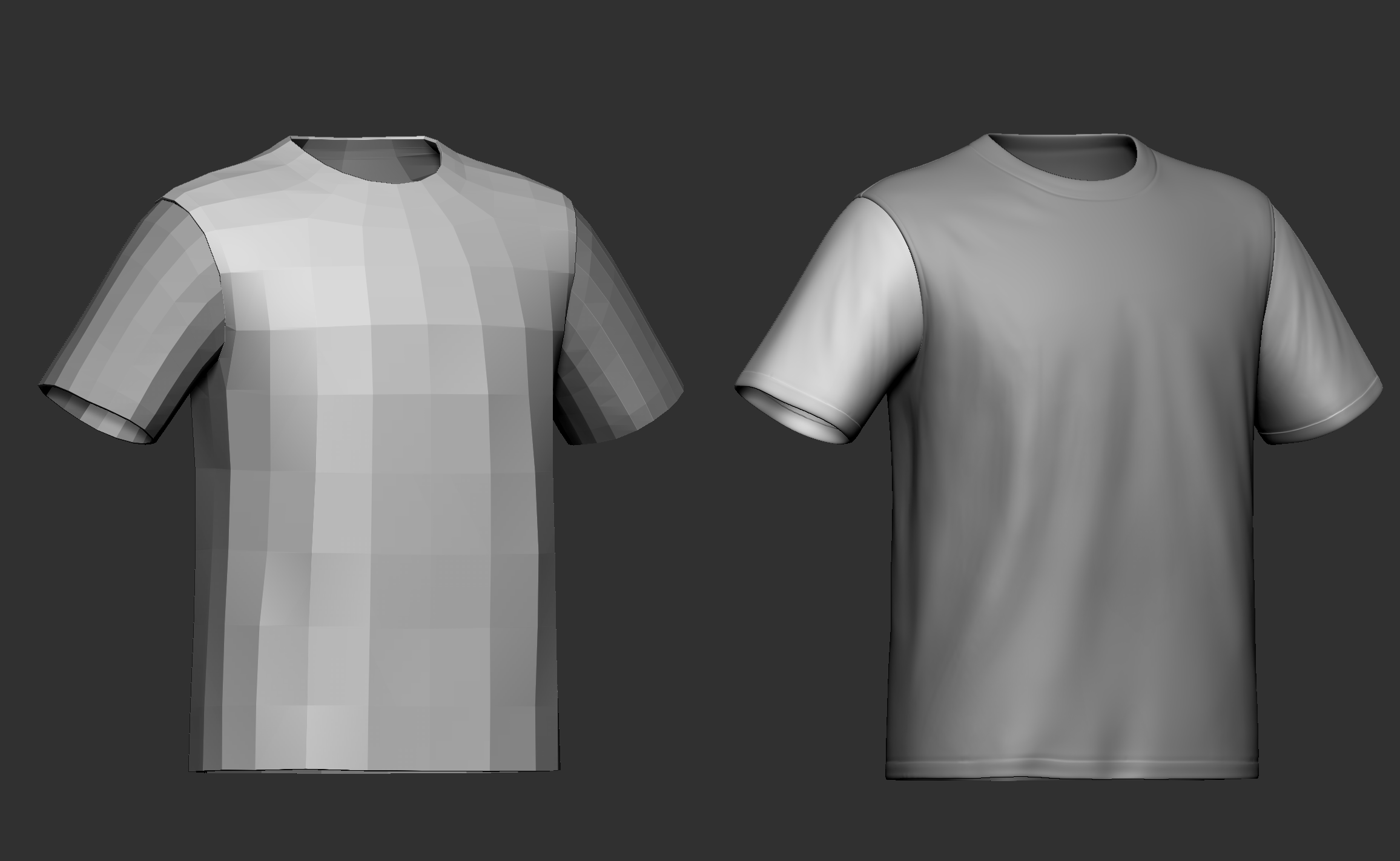
1. Creating a base mesh in 3dsMax

<figure><img src="/files/4voiO8Q4QZed0NWXBQpV" alt=""><figcaption><p><strong>3dsMax</strong></p></figcaption></figure>

2. High-detail expression in Zbrush

<figure><img src="/files/bIYI52bUrIs344LcdIL4" alt=""><figcaption><p><strong>Zbrush</strong></p></figcaption></figure>

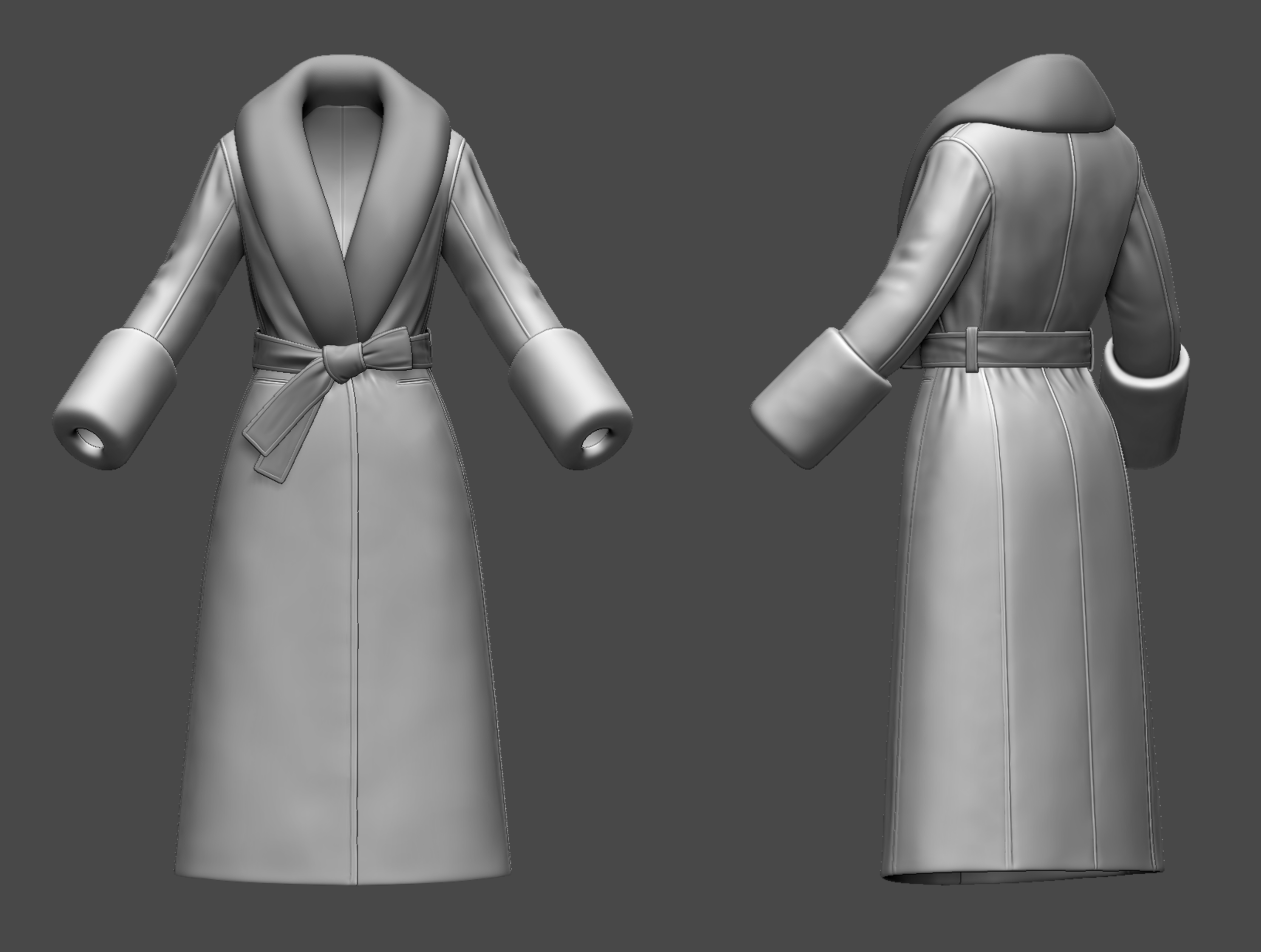
## Marvelous Designer ( CLO )

1. Create patterns using Marvelous Designer

<figure><img src="/files/AVsxWviKTuyXiM28udD8" alt=""><figcaption><p>Marvelous Designer</p></figcaption></figure>

<figure><img src="/files/6AH25mw0r5zRmferMhvW" alt=""><figcaption><p>Marvelous Designer</p></figcaption></figure>

2. Add polygon cleanup object in Zbrush, high detail expression

<figure><img src="/files/Yll0xrKHh3ePvILdvjdK" alt=""><figcaption><p><strong>Zbrush</strong></p></figcaption></figure>

## Style&#x20;

Before creating the 3D model, collecting various reference materials can be helpful.

<figure><img src="/files/3a0pyCSjtuzuSxvZZtb8" alt=""><figcaption></figcaption></figure>

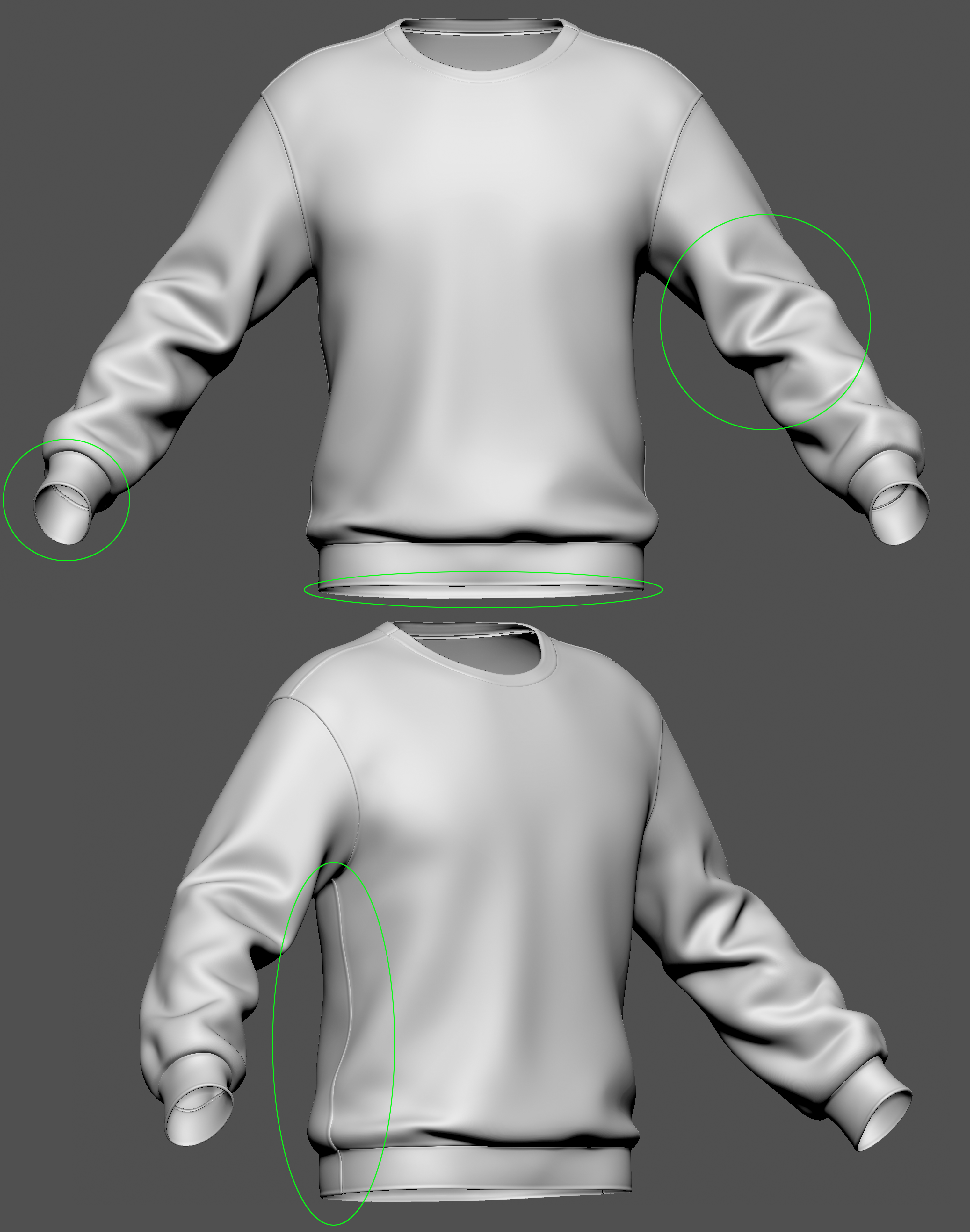
Express folds based on the characteristics of the fabric.

Natural folds created by the thickness of leather, cotton, denim, knit, silk, etc.

{% hint style="info" %}
Express the fit and gravitational fold of the clothing.
{% endhint %}

<figure><img src="/files/Ov3ojwautI0zHncyYTgm" alt=""><figcaption></figcaption></figure>

{% hint style="info" %}
Prioritize large silhouettes over too many small folds.
{% endhint %}

<figure><img src="/files/sCrcdkVjFNeK0n0WsaAh" alt=""><figcaption></figcaption></figure>

{% hint style="info" %}
Make the large silhouette symmetrical if possible.
{% endhint %}

<figure><img src="/files/73nDf8vKRlWJh4OWrvMr" alt=""><figcaption></figcaption></figure>

<figure><img src="/files/kiKJV6bakliUGE5YUzj4" alt=""><figcaption></figcaption></figure>

{% hint style="warning" %}
Detail the part where the center of attention is focused asymmetrically.
{% endhint %}

<figure><img src="/files/cheHMoBMNkaBHPKdsO4V" alt=""><figcaption></figcaption></figure>

{% hint style="info" %}
Clearly express the characteristics of the attire type (folds held by belts and rubber bands at the waist, etc.)
{% endhint %}

<figure><img src="/files/155IPWAnD6WHi0x5xnFu" alt=""><figcaption></figcaption></figure>

<figure><img src="/files/i3zwI6hWjRP9FktJtvqf" alt=""><figcaption></figcaption></figure>

<figure><img src="/files/5v3pQBBWLTiVjNkibU30" alt=""><figcaption></figcaption></figure>

{% hint style="info" %}
In case of accessories, divide objects rather than express them as a single piece.
{% endhint %}

<figure><img src="/files/QezDDS7jWG8HsjiBbqVF" alt=""><figcaption></figcaption></figure>

{% hint style="info" %}
Detail the stitching characteristics and joints.
{% endhint %}

<figure><img src="/files/AfwBqTUfLZIIhEuwZHjC" alt=""><figcaption></figcaption></figure>

{% hint style="success" %}

* Refer to the silhouette of the attire based on references.&#x20;
* The fold representation should consider the characteristics of the fabric material to avoid awkwardness.
* &#x20;Clear detailing is essential in 3D for effective representation.&#x20;
* It's best to neatly and clearly finish the ends.
  {% endhint %}

<figure><img src="/files/qc4EjSVc3Fp8hT8Bjfdn" alt=""><figcaption></figcaption></figure>

## **Examples of ALTAVA 3D models with highpoly**

<figure><img src="/files/sUIe3xOjKwm0p8Jols4d" alt=""><figcaption></figcaption></figure>

<figure><img src="/files/tU2TYNs3U4zVaf9enk9F" alt=""><figcaption></figcaption></figure>

<figure><img src="/files/5SP0Ch5OgwcTKhfRoxu8" alt=""><figcaption></figcaption></figure>

<figure><img src="/files/Ly7xvmtZ706R9O4qCLdY" alt=""><figcaption></figcaption></figure>


---

# Agent Instructions: Querying This Documentation

If you need additional information that is not directly available in this page, you can query the documentation dynamically by asking a question.

Perform an HTTP GET request on the current page URL with the `ask` query parameter:

```
GET https://docs.altava.com/creator-guide/3d-modeling/high-polygons.md?ask=<question>
```

The question should be specific, self-contained, and written in natural language.
The response will contain a direct answer to the question and relevant excerpts and sources from the documentation.

Use this mechanism when the answer is not explicitly present in the current page, you need clarification or additional context, or you want to retrieve related documentation sections.